Anti-derivatives
原函数F(x),则F ′ ( x ) = f ( x )
∫ f ( x ) d x = F ( x ) + C integral sign∫ ∫
设F(x)与G(x)均是f(x)的原函数,则F(x)-G(x)=C
∫ f ( x ) d x = h ( x ) + c
F ( x ) = ∫ f ( x ) d x = h ( x ) + C 1 G ( x ) = ∫ f ( x ) h x = h ( x ) + C 2 F ( x ) − G ( x ) = C 1 − C 2 = C 两个常数相减还是一个常数。
题目(定义)
若∫ f ( x ) d x = x 2 e 2 x + C f ( x )
∫ f ( x ) d x = x 2 e 2 x + C = F ( x ) + c ∴ F ( x ) = x 2 e 2 x F ′ ( x ) = f ( x ) 若F(x)是f(x)的一个原函数,则()成立
A. ∫ f ( x ) d x = F ( x )
B. ∫ F ( x ) d x = f ( x )
C. ∫ f ( x ) d x = F ( x ) + C 正确答案为C。
D. ∫ F ( x ) d x = f ( x ) + C
设∫ f ( x ) d x = sin x + C f ( x ) f ( x ) = ( sin x + c ) ′ = cos x
设F(x)为e − x 2 d F ( x ) e − x 2
F ′ ( x ) = e − x 2 ∫ e − x 2 d x = F ( x )
d F ( x ) = F ′ ( x ) d x = e − x 2 d x 设f(x)的一个原函数为x 1 f ′ ( x ) =
F ( x ) f ( x ) f ′ ( x ) = x 1 = F ′ ( x ) = ( x 1 ) ′ = − x 2 1 = ( − x 2 1 ) ′ = 2 x − 3 不定积分性质
d y d □ = y ′ d x = □ ′ d x 下列等式正确的是[ ∫ f ( x ) d x ] ′ = f ( x ) [ ∫ f ( x ) d x ] ′ = ( F ( x ) + c ) ′ = f ( x )
B.d [ ∫ f ( x ) d x ] = f ( x ) d [ ∫ f ( x ) d x ] = f ( x ) d x
C.∫ F ′ ( x ) d x = f ( x ) ∫ F ′ ( x ) d x = ∫ f ( x ) d x = F ( x ) + C
D.d [ ∫ f ( x ) d x ] = f ( x ) + c d ( F ( x ) + C ) = f ( x ) d x
求∫ d sin x d sin x = ( sin x ) ′ d x = cos x d x
∴ 原式 = ∫ cos x d x = sin x + C 设 f ( x ) = e 2 x ∫ f ′ ( x ) d x
f ′ ( x ) ∴ 原式 原式 ∵ ( e 2 x ) ′ ∴ ( 2 1 e 2 x ) ′ 原式 答案为 : = e 2 x ⋅ 2 = 2 e 2 x = ∫ 2 e 2 x d x 把 2 提出来 = 2 ∫ e 2 x d x = 2 e 2 x = e 2 x = 2 ⋅ ( 2 1 e 2 x + C ) e 2 x + C 第二种方法用定义:
∫ f ( x ) d x ∫ f ′ ( x ) d x = F ( x ) + C = f ( x ) + C = e 2 x + C 直接积分法
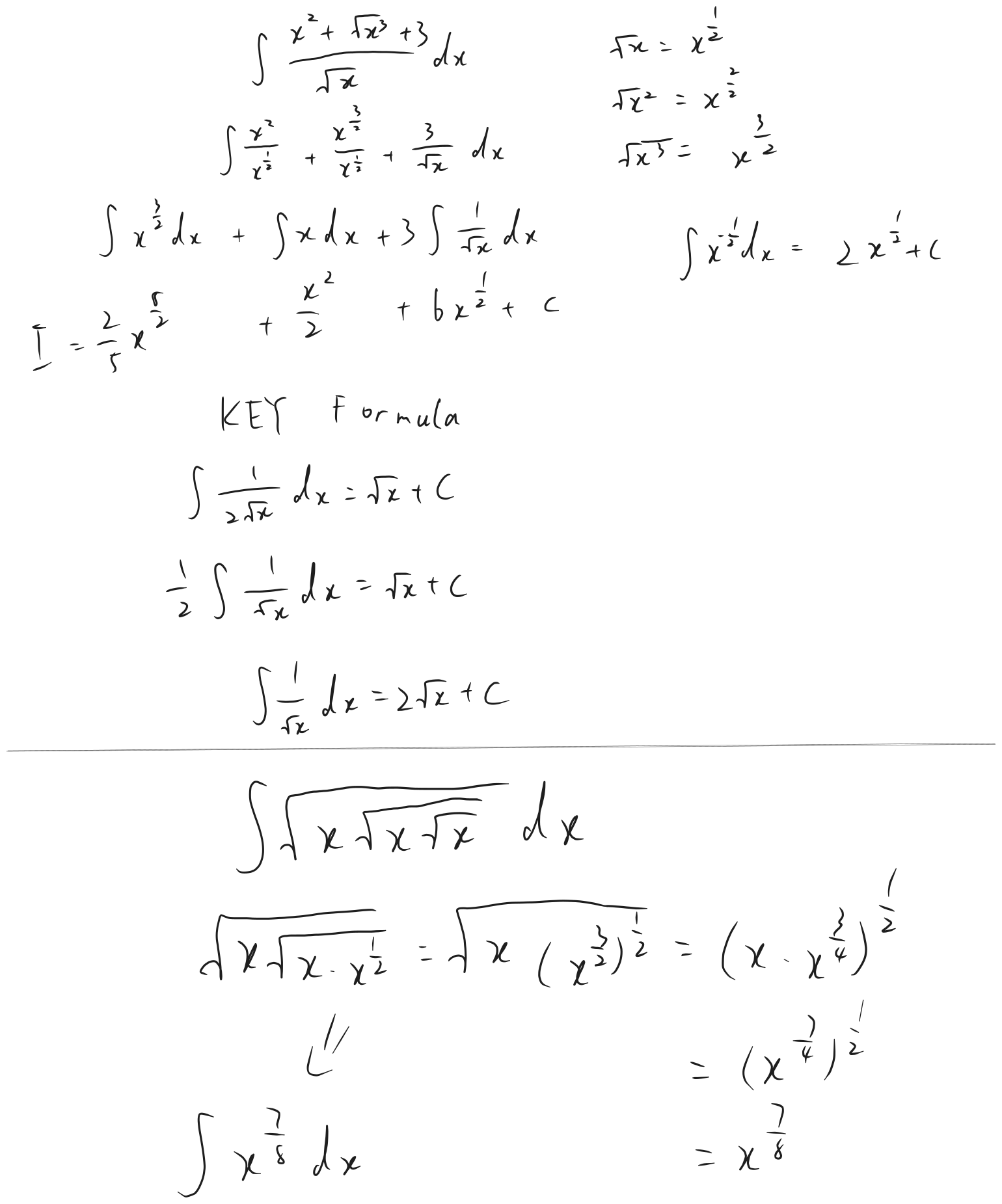
有根号(化幂函数)
∫ x ( x 2 − 5 ) d x
原式 = ∫ x 2 1 ( x 2 − 5 ) d x = ∫ ( x 2 5 − 5 x 2 1 ) d x = 7 2 x 2 7 − 5 ⋅ 3 2 ⋅ x 2 3 + C ∫ x 3 x d x
∫ x 2 1 x 3 1 d x = ∫ x − 6 1 d x 5 6 x 6 5 + C
分子分母同次方(有相同项)
∫ 1 + x 2 x 2 d x 有相同项,分子分母凑
原式 = ∫ 1 + x 2 ( 1 + x 2 − 1 ) d x = ∫ ( 1 + x 2 1 + x 2 − 1 + x 2 1 ) d x = ∫ 1 d x − ∫ 1 + x 2 1 d x = x − arctan x + C
分子次方 > 分母次方(降次)
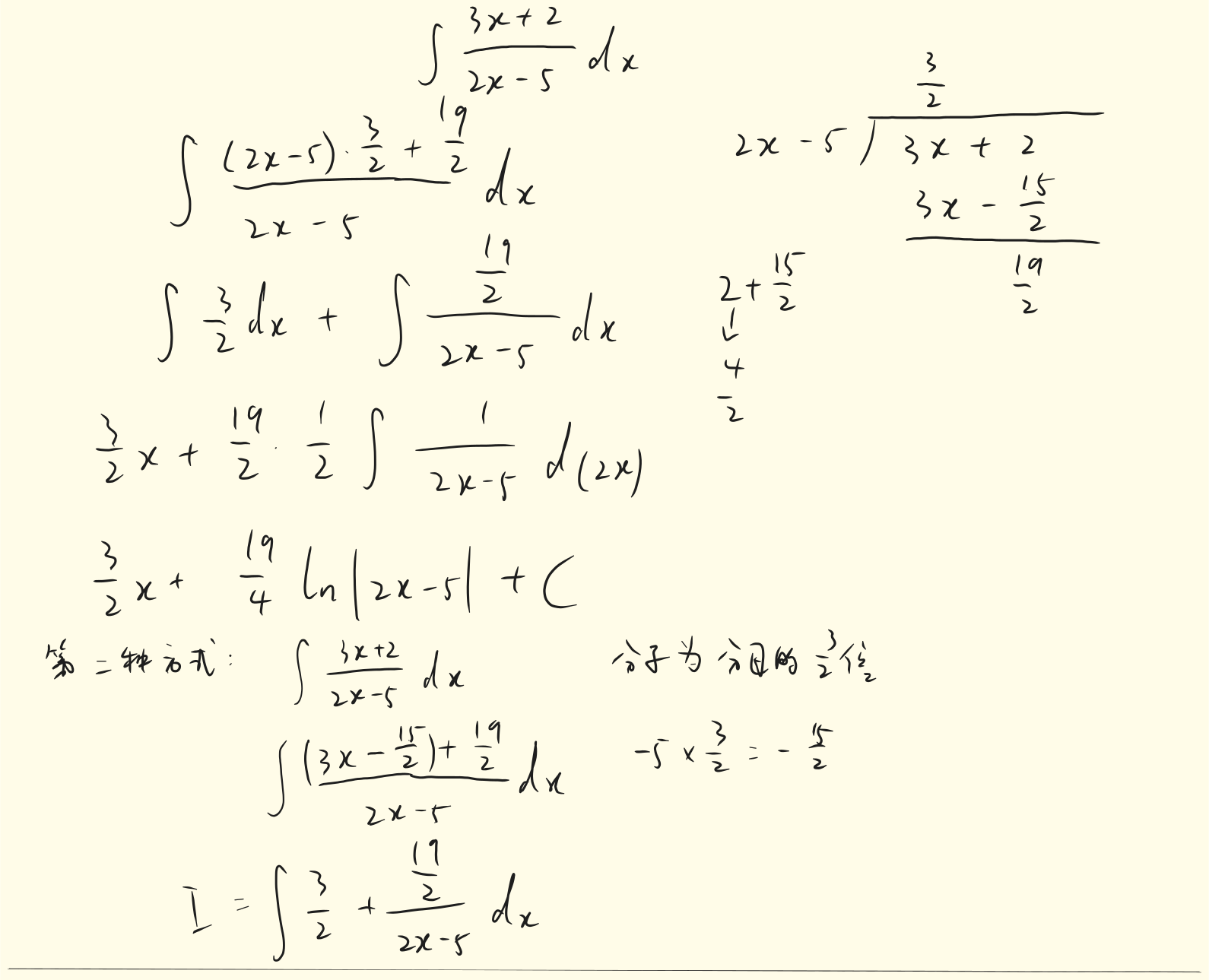
假分式
凑
∫ x 2 + 1 3 x 4 + 3 x 2 + 1 d x
∫ x 2 + 1 3 x 4 + 3 x 2 + x 2 + 1 1 d x ∫ x 2 + 1 3 x 2 ⋅ ( x 2 + 1 ) + x 2 + 1 1 d x ∫ 3 x 2 + 1 + x 2 1 d x 3 ∫ x 2 d x + ∫ 1 + x 2 1 d x 3 ⋅ 3 1 x 3 + arctan x + C x 3 + arctan x + C ∫ 1 + x 2 x 4 d x x 2 ( x 2 + 1 ) − x 2
∫ 1 + x 2 ( 1 + x 2 ) ⋅ x 2 − x 2 d x ∫ ( 1 + x 2 ( 1 + x 2 ) ⋅ x 2 − 1 + x 2 x 2 ) d x ∫ ( x 2 − 1 + x 2 x 2 ) d x ∫ ( x 2 − 1 + x 2 1 + x 2 − 1 ) d x ∫ ( x 2 − 1 + 1 + x 2 1 ) d x 3 1 x 3 − x + arctan x + C ∫ e x − 1 e 2 x − 1 d x e 2 x = ( e x ) 2
原式 = ∫ e x − 1 ( e x ) 2 − 1 2 d x = ∫ e x − 1 ( e x + 1 ) ( e x − 1 ) d x = ∫ ( e x + 1 ) d x = e x + x + C ∫ x 2 ( x − 1 ) 3 d x
分子拆 ( x − 1 ) 3 = ( x − 1 ) ( x − 1 ) 2 = ( x − 1 ) ( x 2 − 2 x + 1 ) = x 3 − 3 x 2 + 3 x − 1 ∫ x 2 x 3 − 3 x 2 + 3 x − 1 d x ∫ x d x − ∫ 3 d x + 3 ∫ x 1 d x − ∫ x 2 1 d x 2 1 x 2 − 3 x + 3 ln ∣ x ∣ + x 1 + C ∫ x 2 + 1 2 x 4 + x 2 + 3 d x 分子进行配凑
x 4 = ( x 2 ) 2 = ( x 2 + 1 − 1 ) 2 [( x 2 + 1 ) − 1 ] 2 = ( x 2 + 1 ) 2 − 2 ( x 2 + 1 ) + 1 ∴ 原式 = ∫ x 2 + 1 2 ( x 2 + 1 ) 2 − 4 ( x 2 + 1 ) + 2 + x 2 + 3 d x ∫ x 2 + 1 2 ( x 2 + 1 ) 2 − 4 ( x 2 + 1 ) + x 2 + 1 + 4 d x ∫ x 2 + 1 2 ( x 2 + 1 ) 2 − 3 ( x 2 + 1 ) + 4 d x ∫ 2 ( x 2 + 1 ) − 3 + 1 + x 2 4 d x ∫ 2 x 2 − 1 + 1 + x 2 4 d x 2 ∫ x 2 d x − ∫ d x + 4 ∫ 1 + x 2 1 d x 2 ⋅ 3 1 x 3 − x + 4 arctan x + C 现在就可以进行拆分了。
另一种凑发
x 4 = ( x 4 − 1 + 1 ) [( x 2 ) 2 − 1 2 + 1 ] ( x 2 + 1 ) ( x 2 − 1 ) + 1 接下来代入原式也可以做出来
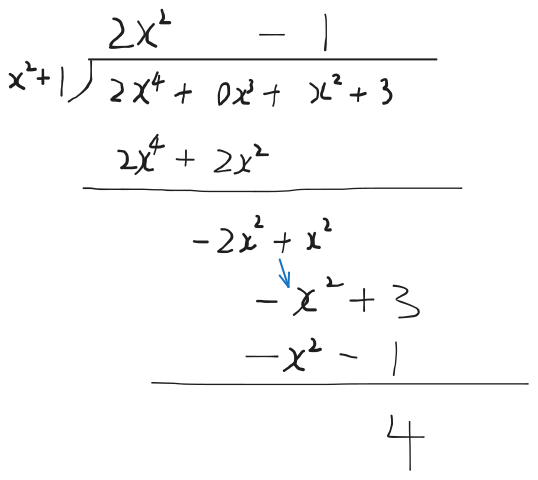
长除法
也可以用多项式除法
2 x 4 + x 2 + 3 = ( x 2 + 1 ) ( 2 x 2 − 1 ) + 4 ∴ ∫ 1 + x 2 ( x 2 + 1 ) ( 2 x 2 − 1 ) + 4 d x ∫ 2 x 2 − 1 + 1 + x 2 4 d x
分子分母有有相同项,和需要将次的方法差不多
拆分
分项:抄分母,再加一个减一个∫ x 4 ( x 2 + 1 ) 1 d x
原式 = ∫ x 4 ( x 2 + 1 ) 1 + x 2 − x 2 d x = ∫ x 4 ( x 2 + 1 ) ( 1 + x 2 ) − x 2 d x = ∫ x 4 1 d x − ∫ x 2 ( x 2 + 1 ) 1 d x = ∫ x 4 1 d x − ∫ x 2 ( x 2 + 1 ) ( 1 + x 2 ) − x 2 d x = ∫ x 4 1 d x − ∫ x 2 1 d x + ∫ x 2 + 1 1 d x = − 3 1 x − 3 + x 1 − arctan x + C ∫ x 2 ⋅ ( 1 + x 2 ) 1 d x
x 2 1 − 1 + x 2 1 = x 2 ( 1 + x 2 ) 1 + x 2 − x 2 = x 2 ⋅ ( 1 + x 2 ) 1 第一种办法裂项∫ x 2 1 d x = ∫ x − 2 d x = − x − 1 + C = − x 1 + C
∫ x 2 1 − 1 + x 2 1 d x = − x 1 − arctan x + C 第二种方法用上题的抄分母
∫ x 2 ⋅ ( 1 + x 2 ) ( 1 + x 2 ) − x 2 d x ∫ x 2 1 d x − ∫ 1 + x 2 1 d x − x 1 − arctan x + C ∫ x 2 − a 2 1 d x
x 2 − a 2 1 = ( x + a ) ( x − a ) 1 x + a 1 − x − a 1 ⇒ ( x + a ) ( x − a ) x − a − ( x + a ) = ( x + a ) ( x − a ) − 2 a − 2 a 1 ⋅ ( x + a 1 − x − a 1 ) = ( x + a ) ( x − a ) 1 提出来是负数,一般不这样提
x 2 − a 2 1 = ( x + a ) ( x − a ) 1 = ( x − a ) ( x + a ) 1 x − a 1 − x + a 1 ⇒ ( x − a ) ( x + a ) ( x + a ) − ( x − a ) = ( x − a ) ( x + a ) 2 a 2 a 1 ( x − a 1 − x + a 1 ) = ( x − a ) ( x + a ) 1 现在开始解题
原式 = ∫ 2 a 1 ( x − a 1 − x + a 1 ) d x 2 a 1 ∫ x − a 1 − x + a 1 d x 根据公式 ∫ x 1 d x = ln ∣ x ∣ + C 2 a 1 ( ln ∣ x − a ∣ − ln ∣ x + a ∣ ) + C 2 a 1 ln ∣ x + a x − a ∣ + C 通用拆分方法
有理分式拆分
指数型
∫ a x d x = l n a a x + C
∫ 3 x ⋅ e x d x = ∫ ( 3 e ) x d x = ln 3 e ( 3 e ) x + C ∫ 3 x 2 ⋅ 3 x − 5 ⋅ 2 x d x 拆分子
∫ 2 − 5 ⋅ 3 x 2 x d x ∫ 2 d x − 5 ∫ ( 3 2 ) x d x 2 x − 5 ln 3 2 ( 3 2 ) x + C = 2 x − 5 ⋅ ln 2 − ln 3 ( 3 2 ) x + C
Drawing 2026-03-01 22.16.14.excalidraw ⚠ Switch to EXCALIDRAW VIEW in the MORE OPTIONS menu of this document. ⚠ You can decompress Drawing data with the command palette: ‘Decompress current Excalidraw file’. For more info check in plugin settings under ‘Saving’
Excalidraw Data
Text Elements Link to original
三角函数型
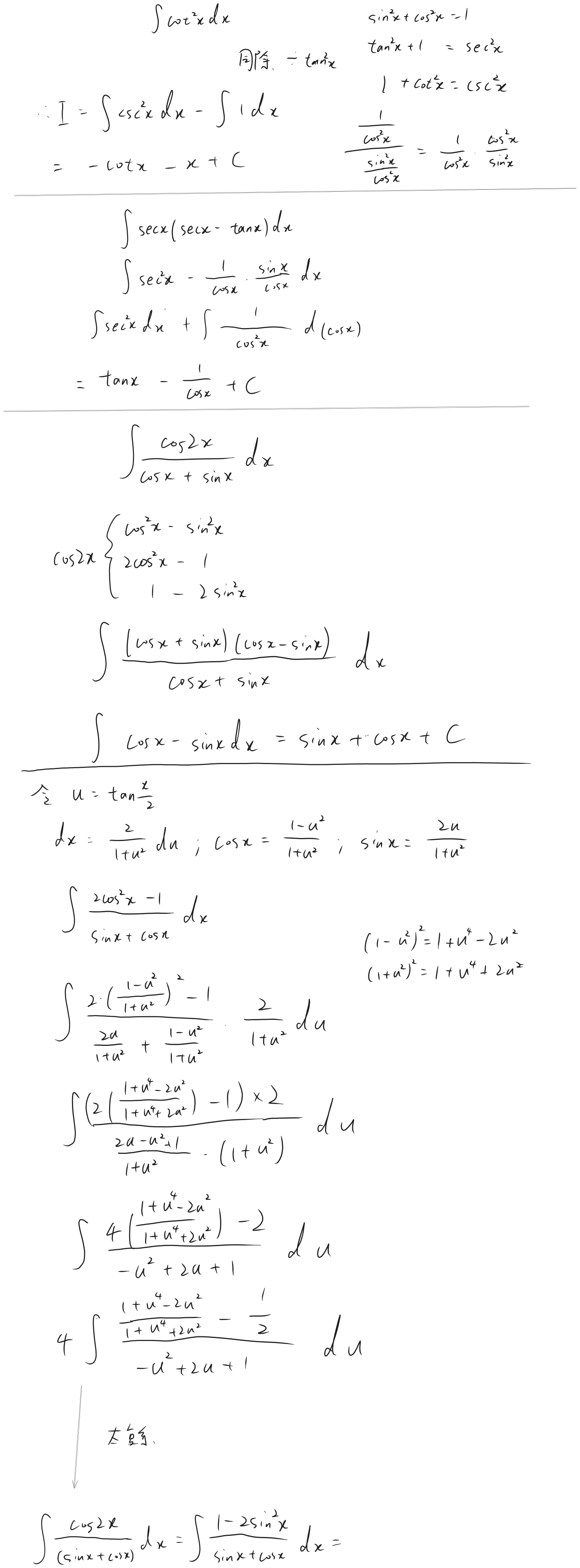
secx 叫 正割函数 (secant)cscx = 余割函数 (cosecant )1 + tan 2 x = sec 2 x = ( c o s x 1 ) 2
cot x = tan x 1 , csc x = sin x 1 sec x = cos x 1 1 + cot 2 x = csc 2 x sin 2 x = 2 1 − c o s 2 x ; cos 2 x = 2 1 + c o s 2 x
∵ arcsin x + arccos x = 2 π arctan x + arccot x = 2 π ∫ 1 − x 2 1 d x = arcsin x + C = − arccos x + C ∫ 1 + x 2 1 d x = arctan x + C = − arccot x + C 证明
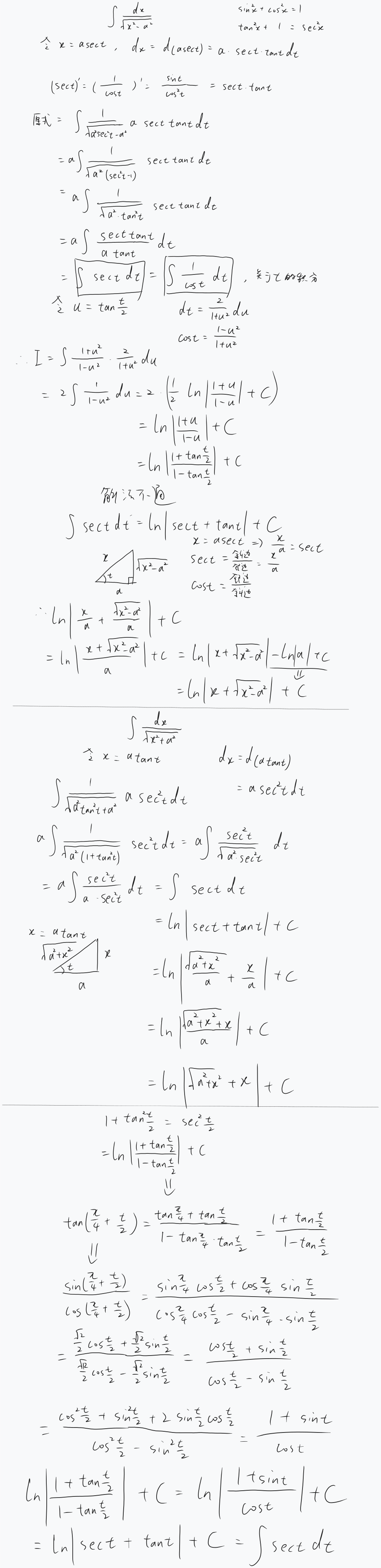
∫ 1 − x 2 1 d x = arcsin x + C = 2 π − arccos x + C = − arccos x + C ∫ 1 + x 2 1 d x = arctan x + C = 2 π − arccot x + C = − arccot x + C ∫ csc x d x = ln ∣ csc x − cot x ∣ + C ∫ csc x d x = ∫ s i n x 1 d x sin 2 x = 2 sin x cos x ∫ 2 s i n 2 x c o s 2 x 1 d x ∫ sec x d x = ln ∣ sec x + tan x ∣ + C ∫ sec x d x = ∫ c o s x 1 d x 令 t = tan 2 x 2 x = tan t x = 2 tan t d x = d ( 2 tan t ) = 1 + x 2 2 d t cos x = cos 2 2 x − sin 2 2 x = c o s 2 2 x + s i n 2 2 x c o s 2 2 x − s i n 2 2 x cos x = 1 + t a n 2 2 x 1 − t a n 2 2 x = 1 + t 2 1 − t 2 ∴ ∫ c o s x 1 d x = ∫ 1 − t 2 1 + t 2 1 + x 2 2 d t 2 ∫ 1 − t 2 1 d t 2 ∫ ( 1 − t ) ( 1 + t ) 1 d t 2 ∫ 1 − t 1 + 1 + t 1 d t ( 1 − t ) ( 1 + t ) 1 + t + 1 − t = ( 1 − t ) ( 1 + t ) 2 ∴ ∫ 1 − t 1 + 1 + t 1 d t ∫ 1 − t 1 d t + ∫ 1 + t 1 d t ln ∣1 + t ∣ − ln ∣1 − t ∣ + C ln ∣ 1 − t 1 + t ∣ + C ln ∣ 1 − t a n 2 x 1 + t a n 2 x ∣ + C 又 ∵ tan ( A + B ) = 1 − t a n A t a n B t a n A + t a n B 1 − t a n 2 x 1 + t a n 2 x = 1 − t a n 4 π t a n 2 x t a n 4 π + t a n 2 x = tan ( 4 π + 2 x ) sin ( 2 x + 4 π ) = sin 2 x cos 4 π + cos 2 x sin 4 π = 2 2 ( sin 2 x + cos 2 x ) cos ( 2 x + 4 π ) = cos 2 x cos 4 π − sin 2 x sin 4 π = 2 2 ( cos 2 x − sin 2 x ) ∴ tan ( 4 π + 2 x ) = c o s 2 x − s i n 2 x s i n 2 x + c o s 2 x 分子分母同乘 cos 2 x + sin 2 x c o s x 1 + s i n x = sec x + tan x ∫ cos x − sin x cos 2 x d x = ∫ cos x − sin x cos 2 x − sin 2 x d x = ∫ cos x − sin x ( cos x + sin x ) ( cos x − sin x ) d x = ∫ cos x + sin x d x sin x − cos x + C ∫ 1 + sin x 1 d x ∫ ( 1 + sin x ) ( 1 − sin x ) 1 − sin x d x ∫ 1 − sin 2 x 1 − sin x d x ∫ cos 2 x 1 − sin x d x ∫ cos 2 x 1 d x − ∫ cos 2 sin x d x ∫ sec 2 x d x − ∫ cos x sin x ⋅ cos x 1 d x ∫ sec 2 x d x − ∫ tan x sec x d x tan x − sec x + C ∫ 1 + cos x 1 − cos x d x 先拆分
∫ 1 + cos x ( 1 + cos ) − 2 cos x d x ∫ 1 − 1 + cos x 2 cos x d x ∫ 1 d x − 2 ∫ 1 + cos x cos x d x ∫ 1 d x − 2 ∫ 1 + cos x ( 1 + cos x ) − 1 d x ∫ 1 d x − 2 ∫ ( 1 − 1 + cos x 1 ) d x ∫ d x − 2 ( ∫ d x − ∫ 1 + cos x 1 d x ) ∫ d x − 2 ∫ d x + 2 ∫ 1 + cos x 1 d x − ∫ d x + 2 ∫ 1 + cos x 1 d x 现在来算一下这个积分∫ 1 + c o s x 1 d x cos 2 α = 2 cos 2 α − 1 1 + cos 2 α = 2 cos 2 α x = 2 α , α = 2 x 1 + cos x = 2 cos 2 2 x
∫ 1 + cos x 1 d x ∫ 2 cos 2 2 x 1 d x ∫ 2 1 ⋅ cos 2 2 x 1 d x 2 1 ∫ sec 2 2 x d x 令 t = 2 x , x = 2 t 原式 = 2 1 ∫ sec 2 t d 2 t 2 1 2 ∫ sec 2 t d t ∫ sec 2 t d t tan t + C 即 tan 2 x + C 再代入原式
− x + 2 tan 2 x + C
万能公式
推导,令u = tan 2 x
sin x = 1 ( 2 sin 2 x cos 2 x ) = sin 2 2 x + cos 2 2 x ( 2 sin 2 x cos 2 x ) 同除 cos 2 2 x = tan 2 2 x + 1 ( 2 tan 2 x ) = u 2 + 1 2 u cos x = sin 2 2 x + cos 2 2 x cos 2 2 x − sin 2 2 x = tan 2 2 x + 1 1 − tan 2 2 x = u 2 + 1 1 − u 2 d u = d tan 2 x = sec 2 2 x ⋅ 2 1 d x ⇒ d x = sec 2 2 x 2 d u = 1 + tan 2 2 x 2 d u = 1 + u 2 2 d u 万能代换公式,令u = tan 2 x
sin x = 1 + u 2 2 u , cos x = 1 + u 2 1 − u 2 , d x = 1 + u 2 2 d u 完美适用sinx,cosx仅一次情况
∫ 1 + sin x + cos x 1 d x = ∫ 1 + 1 + u 2 2 u + 1 + u 2 1 − u 2 1 ⋅ 1 + u 2 2 d u = ∫ 1 + 1 + u 2 2 u + 1 + u 2 1 − u 2 1 + u 2 2 d u ∫ 1 + u 2 + 2 u + 1 − u 2 2 d u ∫ 1 + 2 u + 1 2 d u ∫ 1 + u 1 d u ∫ 1 + u 1 d ( 1 + u ) ln ∣1 + tan 2 x ∣ + C 凑微分法
第一类换元积分法
更精准地说,不定积分不是求导的逆运算,而是微分的逆运算;不定积分和微分才是真正的一对。
使用条件:
遇到被积函数复杂Q ( x ) ∫ Q ( x ) d x
拆这个函数Q(x),∫ f [ g ( x )] ⋅ g ′ ( x ) d x
现在g ′ ( x ) d x
所以变为∫ f [ g ( x )] d g ( x )
令g(x)=u,∫ f ( u ) d u
F ( u ) + C 最后再回代回来F ( g ( x )) + C
凑微分的条件:
若被积函数可分成f ( x ) ⋅ g ( x ) g ( x ) f ( x )
且若f(x)较复杂,且f(x)求导可以得到g(x)的倍数
∫ cos ( e x ) ⋅ e x d x [ sin ( e x ) ] ′ = cos ( e x ) ⋅ e x
现在用换元法
df ( x ) d e x ∴ 原式 令 e x 原式 ∴ 原式 = f ′ ( x ) d x = ( e x ) ′ d x = e x d x = ∫ cos ( e x ) d ( e x ) = u = ∫ cos u d u = sin u + C = sin e x + C ∫ 1 − x 2 e a r c c o s x d x ∫ e a r c c o s x ⋅ 1 − x 2 1 d x ∵ ( arccos x ) ′ = − 1 − x 2 1 ∴ 原式 = − ∫ e a r c c o s x ⋅ ( arccos x ) ′ d x − ∫ e a r c c o s x d ( arccos x ) 令 arccos x = u 原式 = − ∫ e u d u = − e u + C = − e a r c c o s x + C 求∫ x 2 1 ⋅ e 1 − x 1 d x ( x − 1 ) ′ = − x − 2 = − x 2 1 x 2 1 = − ( x − 1 ) ′
原式 = ∫ e 1 − x 1 − ( x − 1 ) ′ d x ∫ e 1 − x 1 ( − x 1 ) ′ d x 常数求导为 0 ,所以再添一个 1 ∫ e 1 − x 1 ( 1 − x 1 ) ′ d x ∫ e 1 − x 1 d ( 1 − x 1 ) ∫ e u d u e u + C e 1 − x 1 + C 另一种解法:∫ x 2 1 ⋅ e 1 − x 1 d x e 1 − x 1 x 2 1 ( 1 − x 1 ) ′ = − ( x 1 ) ′ = − ( − 1 ) x − 2 = x 2 1
原式 = ∫ e 1 − x 1 ( 1 − x 1 ) ′ d x ∫ e 1 − x 1 d ( 1 − x 1 ) 再换元就可以求出答案
∫ x 2 − x − 2 2 x − 1 d x
∫ x 2 − x − 2 1 ⋅ ( 2 x − 1 ) d x 复杂:x 2 − x − 2 1 2 x − 1 ( x 2 − x − 2 ) ′ = 2 x − 1
原式 = ∫ x 2 − x − 2 1 ⋅ ( x 2 − x − 2 ) ′ d x ∫ u 1 ⋅ d u ln ∣ u ∣ + C ln ∣ x 2 − x − 2∣ + C x e − 2 x 2 d x = d ( ) 我们知道:d □ = □ ′ d x □ ′
∫ x e − 2 x 2 d x 复杂:e − 2 x 2 ( − 2 x 2 ) ′ = − 2 ⋅ 2 x = − 4 x
∫ e − 2 x 2 ( − 4 x ) ⋅ ( − 4 1 ) d x − 4 1 ∫ e − 2 x 2 ( − 2 x 2 ) ′ d x − 4 1 ∫ e − 2 x 2 d ( − 2 x 2 ) − 4 1 ∫ e u d ( u ) − 4 1 e u + C − 4 1 e − 2 x 2 + C 若∫ f ( x ) d x = F ( x ) + C ∫ e x f ( e x ) d x = F ( e x ) + C e x = u ∫ u f ( u ) d x
u ′ = u = e x
原式 = ∫ f ( u ) u d x = ∫ f ( u ) u ′ d x = ∫ f ( u ) d u = F ( u ) + C = F ( e x ) C 凑微分法 2
若被积函数中,复杂函数求导,无法得到简单函数的倍数。
∫ e x + e − x 1 d x 化简(被积函数分子分母)
∫ ( e x + e − x ) e x e x d x ∫ ( e x ) 2 + 1 e x d x ∫ ( e x ) 2 + 1 1 e x d x ∫ ( e x ) 2 + 1 1 d e x ∫ 1 + ( e x ) 2 1 d e x ∫ 1 + ( u ) 2 1 d u arctan u + C arctan ( e x ) + C
Drawing 2026-03-02 01.02.52.excalidraw ⚠ Switch to EXCALIDRAW VIEW in the MORE OPTIONS menu of this document. ⚠ You can decompress Drawing data with the command palette: ‘Decompress current Excalidraw file’. For more info check in plugin settings under ‘Saving’
Excalidraw Data
Text Elements Link to original
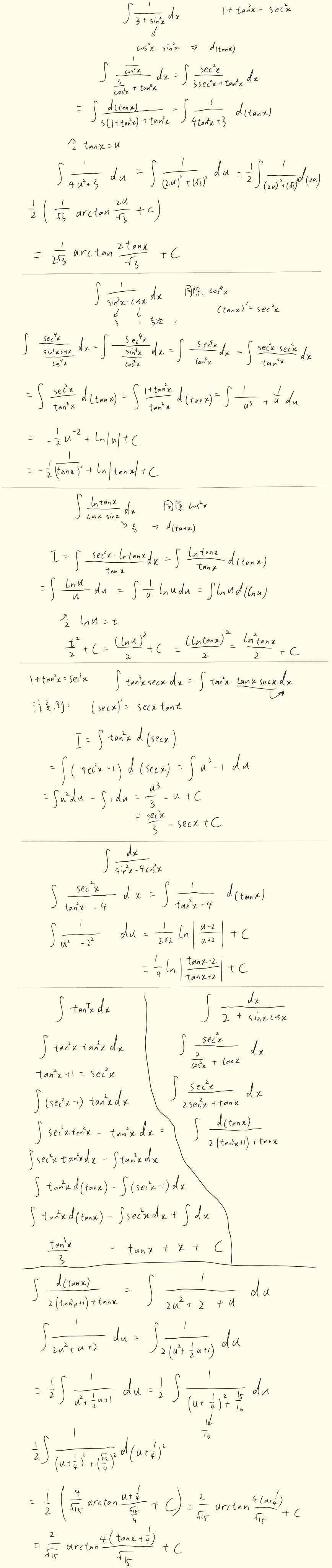
凑微分法 3 三角函数次方
遇到sin 偶 x , sin 奇 x ⇒ 奇拆,偶降
∫ cos 3 x ⋅ d x = ∫ cos 2 x cos x d x = ∫ cos 2 x d sin x = ∫ ( 1 − sin 2 x ) d sin x = ∫ ( 1 − t 2 ) d t = ∫ 1 d t − ∫ t 2 d t = t − 3 1 t 3 + C sin x − 3 1 sin 3 x + C ∫ sin x cos 5 x d x
∫ sin x cos 4 x cos x d x ∫ sin x cos 4 d sin x ∫ sin x ( cos 2 x ) 2 d sin x ∫ sin x ( 1 − sin 2 x ) 2 d sin x ∫ u ( 1 − u 2 ) 2 d u ∫ u 2 1 ( 1 − 2 u 2 + u 4 ) d u ∫ ( u 2 1 − 2 u 2 5 + u 2 9 ) d u 3 2 u 2 3 − 2 ⋅ 7 2 u 2 7 + 11 2 u 2 11 + C 3 2 u 2 3 − 7 4 u 2 7 + 11 2 u 2 11 + C 3 2 sin x 2 3 − 7 4 sin x 2 7 + 11 2 sin x 2 11 + C 更普遍的情况:sin m x ⋅ cos n x
sin x cos x d ( cos x ) , or d ( sec x ) cos x sin x d ( sin x ) , or d ( csc x ) cos x sin x d ( tan x ) d ( cot x )
凑微分公式法
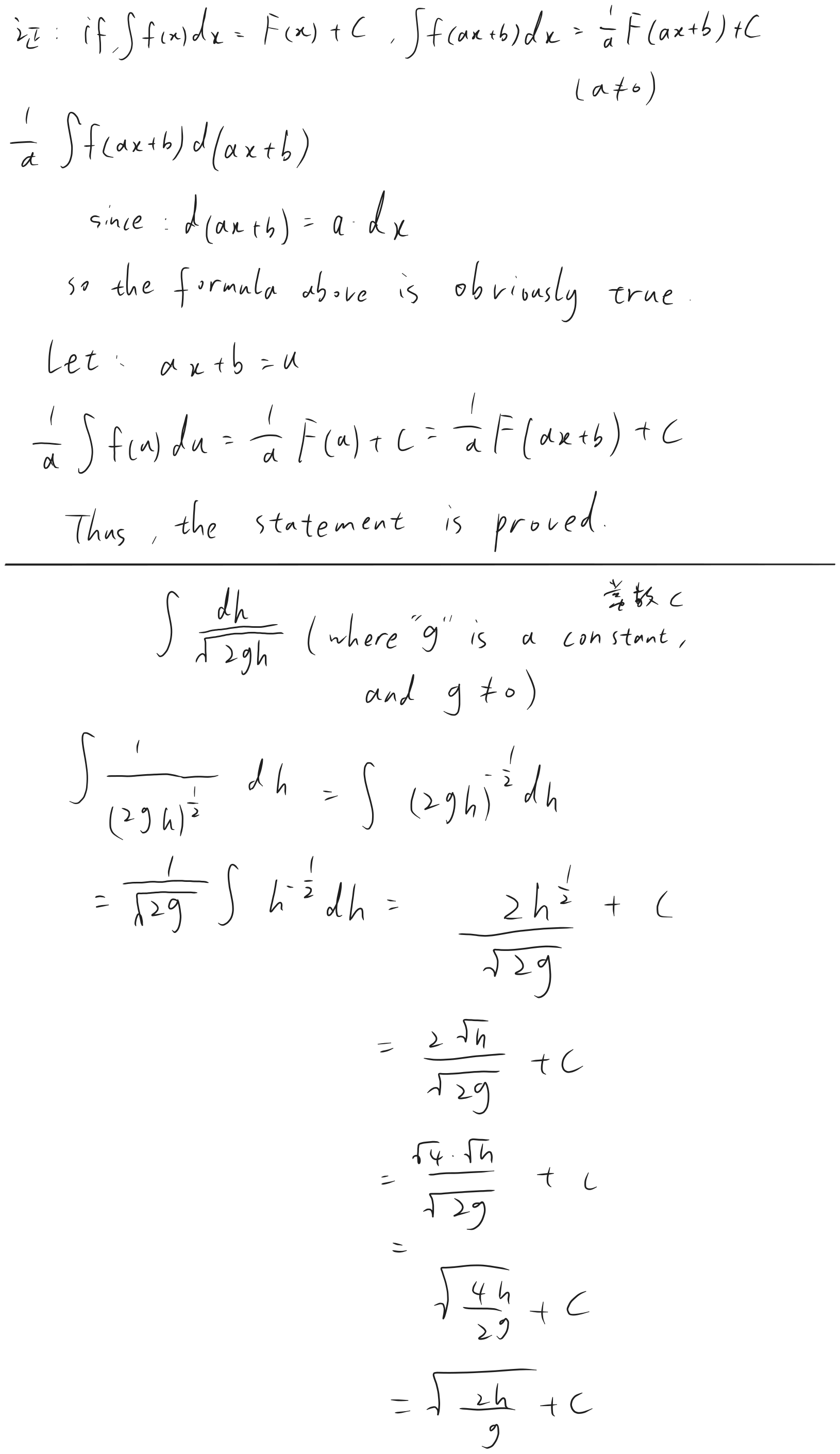
∫ f ( a x + b ) d x = a 1 ∫ f ( a x + b ) d ( a x + b ) 证明:d ( a x + b ) = a d x
原式 = a 1 ∫ f ( a x + b ) a d x = ∫ f ( a x + b ) d x ∫ ( 3 x + 1 ) 2 d x 不用公式做:
∫ ( 9 x 2 + 1 + 6 x ) d x ∫ 9 x 2 d x + ∫ d x + ∫ 6 x d x 9 ∫ x 2 d x + ∫ d x + 6 ∫ x d x 9 ⋅ 3 1 x 3 + x + 6 ⋅ 2 1 x 2 + C 3 x 3 + x + 3 x 2 + C 用公式
∫ ( 3 x + 1 ) 2 d x = 3 1 ∫ ( 3 x + 1 ) 2 d ( 3 x + 1 ) 3 1 ∫ u 2 d u 3 1 ⋅ 3 1 u 3 + C 9 1 ( 3 x + 1 ) 3 + C 9 1 ( 27 x 3 + 3 ⋅ 9 x 2 ⋅ 1 + 3 ⋅ 3 x + 1 ) + C 3 x 3 + 3 x 2 + x + C ( a + b ) 3 = a 3 + 3 a 2 b + 3 a b 2 + b 3
∫ e 5 t d t
5 1 ∫ e 5 t d 5 t 5 1 ∫ e u d u 5 1 e u + C 5 1 e 5 t + C ∫ e x − 3 d x
∫ e x − 3 d ( x − 3 ) ∫ e u d u e u + C e x − 3 + C 第二种方法
∫ e x ⋅ e − 3 d x e − 3 ∫ e x d x e − 3 ( e x + C ) e x − 3 + C ∫ x a d x = a + 1 1 x a + 1 + C ( x = − 1 ) ∫ x 1 d x = ln ∣ x ∣ + C ( x = 0 ) 不要混淆
∫ 1 + x 2 1 d x = ∫ ( 1 + x 2 ) − 1 d x = ln ∣1 + x 2 ∣ + C ∫ x 2 1 d x = ∫ x − 2 d x = − x − 1 + C ∫ a 2 − x 2 1 d x = 2 a 1 ln ∣ a − x a + x ∣ + C 推导过程
∫ a 2 − x 2 1 d x = ∫ ( a + x ) ( a − x ) 1 d x 2 a 1 ∫ ( a + x ) ( a − x ) ( a + x ) + ( a − x ) d x 2 a 1 ∫ a − x 1 + a + x 1 d x 2 a 1 ( ∫ a − x 1 d x + ∫ a + x 1 d x ) 先求 ∫ a − x 1 d x 令 t = a − x , x = a − t ∫ t 1 d ( a − t ) = − ∫ t 1 d t = − ln ∣ t ∣ + C = − ln ∣ a − x ∣ + C ∴ 原式 = 2 a 1 ( − ln ∣ a − x ∣ + ln ∣ a + x ∣ + C ) = 2 a 1 ln ∣ a − x a + x ∣ + C ∫ 4 − c o s 2 x s i n x d x ∫ 4 − c o s 2 x 1 d ( − cos x ) ′ − ∫ 4 − c o s 2 x 1 d cos x 令 t = cos x − ∫ 2 2 − t 2 1 d t a = 2 , x = t − ( 4 1 ln ∣ 2 − t 2 + t ∣ ) + C − 4 1 ln ∣ 2 − t 2 + t ∣ + C − 4 1 ln ∣ 2 − c o s x 2 + c o s x ∣ + C 常见微分导数公式
∫ x 2 1 d x = − x 1 + C ∫ 2 x 1 d x = x + C 证明:
( x 1 ) ′ = x 2 − 1 = − x 2 1 ( x ) ′ = ( x 2 1 ) ′ = 2 1 x − 2 1 = 2 x 1 第二类换元积分法 简单无理根式换元法
遇到n a x + b
令t = n a x + b
反解出x
求出dx
回代计算
∫ x 5 3 x + 2 d x t = 5 3 x + 2
t 5 = 3 x + 2 x = 3 t 5 − 2 d x = d ( 3 t 5 − 2 ) d ( 3 t 5 − 2 ) = ( 3 t 5 − 2 ) ′ d t = ( 3 1 ( t 5 − 2 ) ) ′ d t = ( 3 1 t 5 − 3 2 ) ′ d t = 3 1 5 t 4 d t = 3 5 t 4 d t ∴ 原式 = ∫ 3 t 5 − 2 t ⋅ 3 5 t 4 d t 3 1 ∫ ( t 5 − 2 ) t 5 3 5 d t 9 5 ∫ ( t 10 − 2 t 5 ) d t 9 5 ( 11 t 11 − 2 ⋅ 6 t 6 ) + C 9 5 ( 11 t 11 − 3 t 6 ) + C 99 5 t 11 − 27 5 t 6 + C 回代 t 得到答案 99 5 [ ( 3 x + 2 ) 5 1 ] 11 − 27 5 [ ( 3 x + 2 ) 5 1 ] 6 + C ∫ 1 + x 1 d x x = t x = t 2
d x = d t 2 = 2 t d t ∴ 原式 = ∫ 1 + t 1 2 t d t 2 ∫ 1 + t 1 t d t 2 ∫ 1 + t t d t 2 ∫ 1 + t 1 + t − 1 d t 2 ∫ 1 + t 1 + t − 1 + t 1 d t 2 ( ∫ 1 d t − ∫ 1 + t 1 d t ) 2 ( ∫ 1 d t − ∫ 1 + t 1 d ( 1 + t ) ) 2 ( t − ln ∣1 + t ∣ ) + C 最后回代 2 x − 2 ln ∣1 + x ∣ + C 三角代换
利用三角函数平方和公式:去掉含x 2 x 2 a + x 2
含a 2 + x 2 x = a tan t
含a 2 − x 2 x = a sin t
含x 2 − a 2 a = sec t
(2)推导
a 2 − x 2 = a 2 − a 2 sin 2 t = a 2 ( 1 − sin 2 t ) a 2 cos 2 t = a cos t ∫ ( 1 − x 2 ) 2 3 d x 这也是一个根式:
∫ ( 1 − x 2 ) 3 d x 令x=sint
∫ ( 1 − sin 2 t ) 2 3 d sin t ∫ ( cos 2 t ) 2 3 cos t d t ∫ ( cos t 2 ) 2 3 cos t d t ∫ ( cos 3 t ) cos t d t ∫ cos 2 t 1 d t ∫ sec 2 t d t tan t + C 已知:x=sint
Drawing 2025-12-17 13.24.51.excalidraw ⚠ Switch to EXCALIDRAW VIEW in the MORE OPTIONS menu of this document. ⚠ You can decompress Drawing data with the command palette: ‘Decompress current Excalidraw file’. For more info check in plugin settings under ‘Saving’
Excalidraw Data
Text Elements Link to original
代回x:
∴ 原式 = 1 − x 2 x + C ∫ 0 1 1 − x 2 d x 纯用公式做,不用几何法。
先求 ∫ 1 − x 2 d x 令 x = sin t , − 1 ≤ sin t ≤ 1 1 − sin 2 t = cos t ∫ cos t d sin t ∫ cos 2 t d t ∫ 2 1 + c o s 2 t d t 现在求 2 1 ∫ 1 + cos 2 t d t 2 1 ( t + 2 1 sin 2 t ) + C 又 ∵ sin 2 t = 2 sin t cos t , x = sin t , cos t = 1 − sin 2 t ∴ sin 2 t = 2 x 1 − x 2 ∴ 2 1 ( t + 2 1 sin 2 t ) + C = 2 1 ( arcsin x + 2 1 2 x 1 − x 2 ) + C ( 2 1 ( arcsin x + x 1 − x 2 ) ) 0 1 2 1 arcsin 1 + 0 − 2 1 ( arcsin 0 + 0 ) = 2 1 2 π = 4 π ∫ 4 − x 2 1 d x 令 x = 2 sin t , d x = d ( 2 sin t ) = 2 cos t d t ∫ 4 − 4 sin 2 t 2 cos t d t ∫ 4 ( 1 − sin 2 t ) 2 cos t d t ∫ 2 cos t 2 cos t d t ∫ d t = t + C x = 2 sin t , 2 x = sin t ∴ t = arcsin 2 x = arcsin 2 x + C ∫ 1 3 x 2 1 + x 2 1 d x 令 x = tan t , d x = d ( tan t ) = sec 2 t d t x = 3 , t = 3 π x = 1 , t = 4 π 1 + x 2 = 1 + tan 2 t = sec 2 t = sec t ∴ ∫ 4 π 3 π t a n 2 t s e c t 1 ⋅ sec 2 t d t ∫ 4 π 3 π t a n 2 t s e c t d t ∫ 4 π 3 π c o s 2 t s i n 2 t ( c o s t 1 ) d t ∫ 4 π 3 π c o s t s i n 2 t 1 d t ∫ 4 π 3 π s i n 2 t c o s t d t ∫ 4 π 3 π s i n 2 t 1 d ( sin t ) 令 u = sin t t = 3 π , u = 2 3 t = 4 π , u = 2 2 ∫ 2 2 2 3 u − 2 d u − u 1 2 2 2 3 = − 3 2 + 2 2 = − 3 2 3 + 2
分部积分
来源(导数的乘法法则):( uv ) ′ = u ′ v + u v ′
u v ′ = ( uv ) ′ − u ′ v 等式两边积分
⇒ ( 2 ) : ∫ u v ′ d x = ∫ ( uv ) ′ d x − ∫ u ′ v d x ⇒ ∫ u d v = ∫ d uv − ∫ v d u 或者 ∫ u d v = uv − ∫ v d u 得到分部积分公式:
∫ u d v = uv − ∫ v d u
也可以用积分乘法公式推得。
由 2 式变形 得
∫ u d v = uv − ∫ v u ′ d x 使用条件 { 1. 乘积关系 2. 不具有导数关系 类型一
积分式子中,只有一个函数(反三角,对数)
∫ ln x d x 套公式:∫ u d v = uv − ∫ v u ′ d x u=lnx, v=x
原式 = ln x ⋅ x − ∫ x ( ln x ) ′ d x ln x ⋅ x − ∫ x ⋅ x 1 d x ln x ⋅ x − ∫ d x ln x ⋅ x − x + C ∫ arcsin x d x 套公式:∫ u d v = uv − ∫ v u ′ d x
1. u = arcsin x 2. v = x 原式 = arcsin x ⋅ x − ∫ x ( arcsin x ) ′ d x = arcsin x ⋅ x − ∫ x 1 − x 2 1 d x ∵ ( 1 − x 2 ) ′ = − 2 x 原式 = arcsin x ⋅ x − ∫ ( − 2 1 ) ( 1 − x 2 ) ′ 1 − x 2 1 d x = arcsin x ⋅ x + 2 1 ∫ 1 − x 2 1 ( 1 − x 2 ) ′ d x = arcsin x ⋅ x + 2 1 ∫ 1 − x 2 1 d ( 1 − x 2 ) = arcsin x ⋅ x + 2 1 ∫ u 1 d ( u ) ∵ ∫ x 1 d x = 2 x + C = arcsin x ⋅ x + 2 1 ⋅ 2 ⋅ u + C = arcsin x ⋅ x + u + C = arcsin x ⋅ x + 1 − x 2 + C 类型二
积分式子中两个不同类型函数相乘
∫ x tan 2 x d x 两种方式:
u = x v ′ = tan 2 x v = ∫ tan 2 x d x = ∫ ( sec 2 − 1 ) d x = tan x − x + C 原式 = ∫ x ( sec 2 − 1 ) d x = ∫ x d ( tan x − x ) x ( tan x − x ) − ∫ ( tan x − x ) ⋅ 1 ⋅ d x x ( tan x − x ) − ( ∫ tan x d x − ∫ x d x ) x ( tan x − x ) − ( − ln ∣ cos x ∣ − 2 1 x 2 ) + C x ( tan x − x ) + ln ∣ cos x ∣ + 2 1 x 2 + C x tan x + ln ∣ cos x ∣ − 2 1 x 2 + C 第二种解法:
∫ x tan 2 x d x 原式 = ∫ x ( sec 2 x − 1 ) d x ∫ ( x sec 2 x − x ) d x ∫ x sec 2 x − ∫ x d x ∫ x d ( tan x ) − 2 1 x 2 x tan x − ∫ tan x d x − 2 1 x 2 x tan x − ( − ln ∣ cos x ∣ ) − 2 1 x 2 + C x tan x + ln ∣ cos x ∣ − 2 1 x 2 + C 类型三
积分式子 e x , cos x , sin x
∫ e x cos x d x 反对幂指三
1. 2. u = e x v ′ = cos x ⇒ v = sin x 原式 = ∫ e x d sin x e x sin x − ∫ sin x e x d x e x sin x − ∫ e x d ( − cos x ) e x sin x + ∫ e x d cos x e x sin x + e x cos x − ∫ cos x e x d x ∴ ∫ e x cos x d x = e x sin x + e x cos x − ∫ cos x e x d x 2 ∫ e x cos x d x = e x sin x + e x cos x + C ∴ ∫ e x cos x d x = 2 e x sin x + e x cos x + C 类型四
积分式子中,含f ′ ( x ) , f ′′ ( x )
已知f(x)的一个原函数 为sin x ln x ∫ x f ′ ( x ) d x
( sin x ln x + C ) ′ ∫ f ( x ) d x = f ( x ) ( 这题 C 可以不加 ) = sin x ln x + C ∫ x f ′ ( x ) d x = ∫ x df ( x ) = x f ( x ) − ∫ f ( x ) x ′ d x = x f ( x ) − ∫ f ( x ) d x x ( sin x ln x ) ′ − sin x ln x + C x ( cos x ln x + sin x x 1 ) − sin x ln x + C x cos x ln x + sin x − sin x ln x + C 表格法
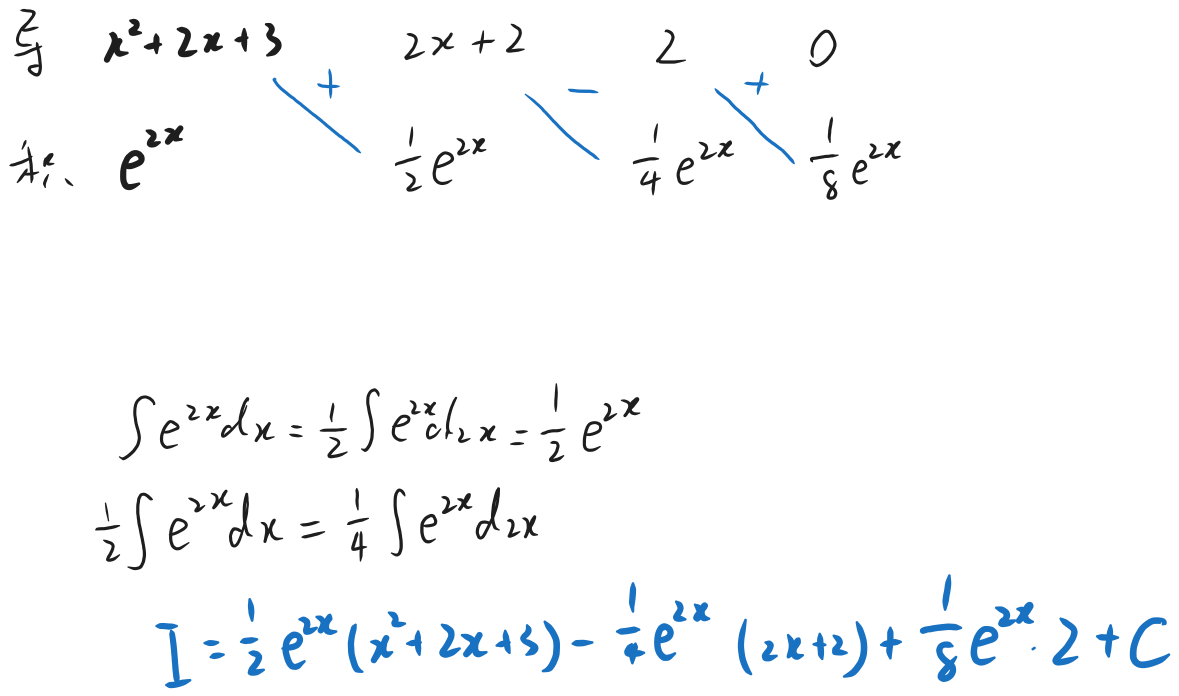
适用题型
∫ P n ( x ) e a x d x , ∫ Q n ( x ) sin b x d x ( P n ( x ) , Q n ( x ) 为多项式 ) 方法:对P n ( x ) e a x , sin b x
∫ ( x 2 + 2 x + 3 ) e 2 x d x
设∫ 0 a x e 2 x d x = 4 1 a =
导 x(+) 1(-) 0 积 e 2 x 2 1 e 2 x 4 1 e 2 x
( 2 1 e 2 x ⋅ x − 4 1 e 2 x ) 0 a = 4 1 2 a e 2 a − 4 1 e 2 a − ( − 4 1 ) = 4 1 循环
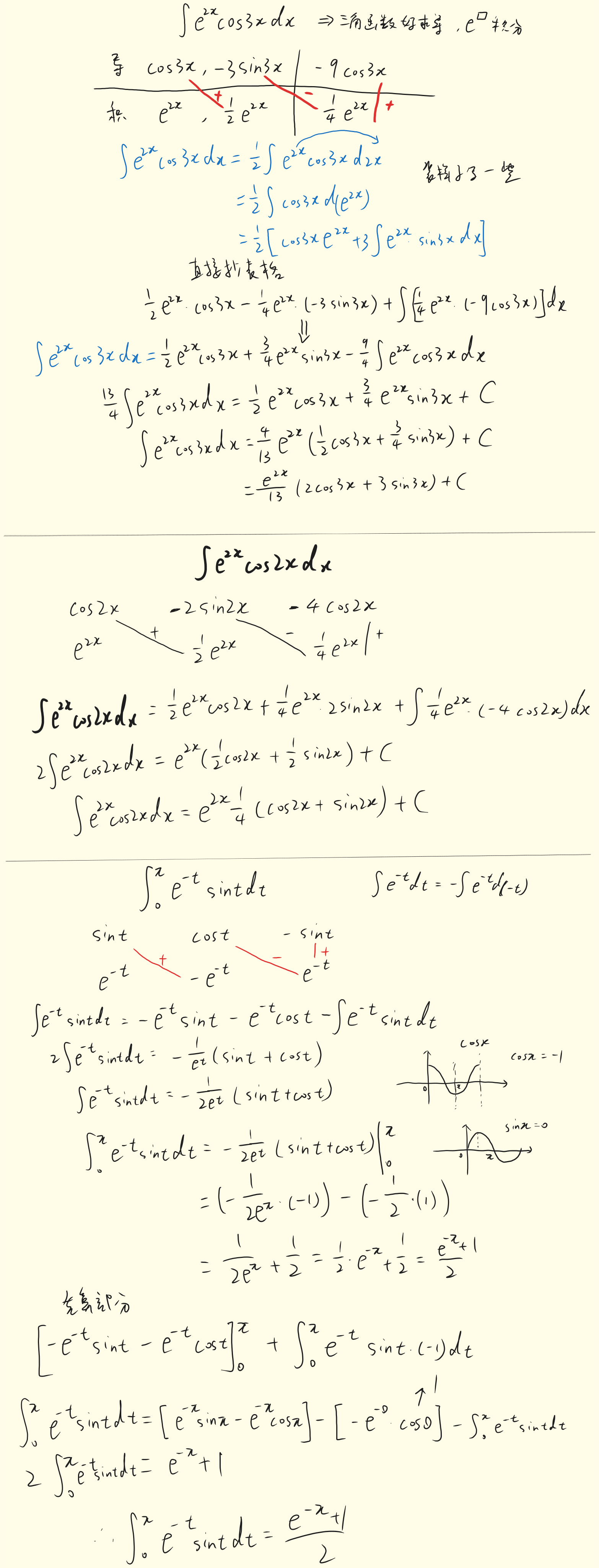
遇到循环(导与积到原积分重现为止)
∫ e 2 x cos 3 x d x
证明题
积分带字母